Showing posts with label Mobiles. Show all posts

Wednesday, 21 May 2014

World's first braille mobile phones goes on sale in UK


UK company OwnFone has launched what it calls the world’s first phone which has braille on the keys, making the device usable by the blind. Speaking to the BBC, OwnFone’s Tom Sunderland said although there have been concept braille phones in the past, this is the first to actually go on sale. What’s more, OwnFone uses 3D printing to keep the costs down, so the phone starts at a mere £60/$100 to buy. 
 
Touchscreens may have kicked-off a mobile computing revolution, but they didn't do much for the visually impaired. OwnFone, which launched a customizable mobile phone for kids and the elderly back in 2012, is now offering its stripped-down handset with braille or raised text contact buttons. The 3D-printed hardware lets you select up to four contacts that can be assigned to the device, making it ideal for emergencies and people who need to stay in touch with family or carers on a regular basis. It's available right now for a base price of £60, plus an additional monthly charge of between £7.50 and £15.00 per month -- depending on how much call time you want or need.

OwnFone has been around since 2012, and the phone was initially only available in the UK and Northern Ireland, but in early April, a version for Australia was also launched. It’s great to see small firms like OwnFone filling a niche, and making good use of the advancements in 3D printing.

Buyers can order the phone through the company’s own website, where the design can be customized, right down to including a picture of your own choice on the rear panel. It’s also possible to add a dedicated key for calling emergency services.

Top 8 Technologies that will shape our FUTURE and has change our lifestyle

8. Autonomous Cars


Today’s cars are packed with a variety of driver assistance aids. You can get most any car today with GPS, but luxury car makers such as Audi, BMW, Mercedes and Volvo provide a whole lot more. Options now include active cruise control, lane departure warning/intervention, traffic info and blind spot warning. These cars can even brake on their own to avoid hitting an obstacle or pedestrian in front of the vehicle.
A few years ago, DARPA ran its Grand Challenge, in which teams competed to race fully autonomous cars that drove themselves. They were tested in off-road, highway and urban settings. Some of these competitors later went to work for Google’s autonomous vehicle efforts. 

In the future, we will have autonomous cars, where driver control will be optional. Even though the thought might seem scary, the cars will be safer than any car you’d pilot yourself. They will constantly evaluate their current environment with multiple sensors -- and they’ll never get distracted by text messages.
Will they be complex to operate? Not at all. Your PMC will act as a user interface to any device, including your autonomous car. It will know your schedule and address book, so when you get into your car one hour before an appointment, the car’s GPS will instantly display the destination address and arrival time. All you have to do is say, “Let’s go!”

7. CAD, 3D Printing & Custom Products


Computer-aided design (CAD) products are popular among engineers, designers and students for creating 3D product designs. But the software is often too advanced for the average consumer to design his or her own products. 

In the future, however, CAD will allow the average consumer to design his own custom products that are both manufacturable and affordable. Consumers will be able to use simple software to combine predefined, configured product features. They’ll be able to personalize further by adding their own color palate, pictures, shapes and even personalized sizing.

3D Printing (3DP), like that from Dimension, is another amazing technology that will take a 3D CAD model and “print” layers of material, one on top of the previous, to produce a real physical model. It can create almost any shape, even those that can’t be made by traditional 
 manufacturing. The downside today is that the process is slow, costly, and often doesn’t produce parts strong enough for real world use. The technology in this industry is always advancing, and in the future, it will be able to produce robust parts quickly and cheaply.

3D Printing in an industrial setting is often referred to as “additive manufacturing.” As products are ordered online, versatile manufacturing stations controlled by robots will quickly and affordably crank out custom-manufactured products. The robots will be controlled by process software that will be integrated with future CAD. 

Online custom products are slowly gaining popularity. You can go to NIKEiD and design your own customized Nike shoes. The downside is that they are pricey and will take several weeks to get to you. Other websites such as ShapeWays and Ponoko are useful for many DIYers. The mass market appeal of sites like these will grow in the future (when combined with the simpler CAD described above) with fast, flexible and inexpensive manufacturing.

6. Social Networking

Social networking as it exists today on Facebook and Twitter requires users to do extra work to extract value. We must diligently manage our community of friends and followers, and weed through all the tweets and posts for those that pique our interest. In the future, the management of our network will be dynamic and automated; the system will make and break connections to ensure maximum value. As updates are posted, for example, only those relevant to you at the present moment will make it through the filter to your PMC.
Social networking may also become more integrated with other components of our digital lives, like our calendars, address books and GPS. When going to a scheduled meeting with someone, you may be presented with recent and relevant posts that person made on Facebook to help prepare for small talk.

Image courtesy of Flickr

5. Augmented Reality

 
Today’s augmented reality (AR) will add floating text, symbols and 3D virtual images to a camera’s video feed to make it more informative or entertaining. Numerous iPhone apps like Layar provide local information. Tissot watches and Olympus cameras have webpages that let you experience virtual products. And Lego has a great point of sale display that lets kids virtually play with the toy inside the box they’re holding. You can even use AR glasses to experience this technology in a slightly more immersive, first-person point of view.
In the future, AR glasses will project images onto the lenses using components that are barely noticeable. Your PMC will display information on your glasses much like a heads-up display (HUD), for instance, with symbols projected along the periphery. Look at a symbol and say something, and your PMC will act on the broadcasted message. Your PMC will also do a great job of minimizing the information displayed, limiting it to just what you need to know now. 

4. Eye-Tracking / Voice Commands

Today’s eye-tracking technology from companies like Tobii is used heavily in usability research. Where are people looking on a webpage, and how do their eyes move around it? Voice recognition products like Dragon from Nuance are used extensively when transcribing voice to text.

In the future, this technology will be combined with augmented reality (AR) to create a near-invisible and natural user interface for your PMC. We’ll call these information glasses. The object you’re viewing and the words you speak will be transmitted to your PMC, which will interpret your intent, find and compute and then transmit the results back to you visually and/or verbally. Look at a restaurant and say, “Do they have good salads there?” A moment later, you will hear the highest-rated salads, communicated via your information glasses either by visual display or audible voice, depending on what you are doing at that moment, like driving.

3. Cloud Computing

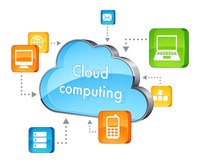
There is certainly a lot of hype around cloud computing, but few technology providers have done a good job explaining or providing services that are relevant to the average person. 
The two most notable exceptions are Google and Apple. Google Docs is arguably the first cloud-based app that gained mainstream traction. Apple’s iCloud looks like it has the potential to cross the chasm and move the early majority into the cloud. 

With tomorrow’s cloud computing, all of our personal information and the applications will be available to us at any time. Whether you’re editing a text document while riding a train, or adjusting a sales proposal at a client’s office, you’ll never be without the information needed to complete a task.

2. 3G and 4G Wireless Broadband

“How many bars do I have?” We’re frequently checking smartphone signal strength when wirelessly browsing the Internet and retrieving our email. Today’s 3G and 4G networks provide acceptable but intermittent connections and okay speed. This must change.

The deployment of today’s cell towers is a slow, deliberate and costly affair. In the future, deployment will be faster and more organic. Wireless providers will likely credit homeowners’ monthly bills for having devices like AT&T’s 3G MicroCell at home. With enough of these devices in place, even remote neighborhoods and towns will enjoy solid wireless access to the cloud.

So in the future, personal mobile computers (PMCs) won’t even have signal strength indicators; wireless access to the cloud will be pervasive and ultra-fast at all times.

1. Smartphones


Smartphones, like today’s iPhone, are as much a computer as they are a communication device. Besides having a great multi-touch interface and fast CPU, they contain sensors like cameras, gyros, accelerometers, GPS and compasses. They allow us to calculate and communicate anytime, anywhere

In the future, they’ll evolve into personal mobile computers (PMC). Assuming that Moore’s law holds true, mobile CPUs with near super-computing speeds will be entirely possible. The number, accuracy and performance of sensors will grow, the combination of which will give the user a very powerful sense of her surroundings.

Your PMC will move to your wrist and take the place of your watch. (Microsoft had this vision with SPOT, but the technology came too early and was too limited.) The device’s display will not need to be your primary user interface (UI), so the PMC can be a small, diverse fashion statement like today’s watches. The primary UI will become personal peripherals, like information glasses and headsets. You’ll be able to interact naturally in a visual and audible way. 

Your PMC and personal peripherals will become your interface to every other computer, device and machine you interact with. The only UI you will ever need to know is that of your PMC.
Not only will your personal peripherals allow you to explicitly interact with the digital (and physical) worlds, but they’ll also provide subtle cues to your subconscious. While looking through your information glasses, a restaurant might emit a subtle, warm blue tint because it was reviewed positively by patrons. It will feel like a good place to eat. Are your spidey senses tingling?

Source : Mashable | images via google


Wednesday, 7 May 2014

5ive BEST Navigation Apps for iPhone


Apple Maps:

Many new iPhone users may be a bit upset with the functionality of the integrated Apple Maps within iOS 6. Many of the phone’s users have reported incomplete search results as well as a host of inaccurate instructions within the turn-by-turn features of the app. The last thing you want is to put trust into an inaccurate GPS system. The best thing to do is to wait until the software has been fixed and has become more reliable. The good news is that there are plenty of alternatives that you can use to get you to and from your destinations. Let’s talk about the 5 best navigation apps for iPhone and what you can expect from using them.


 1. Waze – Free:


One of the best things about Waze is that it is 100% free. This GPS app offers GPS navigation and it also has the function to display detailed traffic information. It is unique in that it pulls all of its traffic information from a user created resource. Now, this can be accurate and beneficial just as long as the other Waze members are nearby. If you live in a rather secluded area, you might want to look elsewhere for traffic details.


2. GPS by Telenav – Free:


Telenav is yet another great free GPS app that has a lot of features. One thing that may turn off some potential users is that some of the more advanced apps require a monthly subscription charge. Users who vouch for the free service can expect to get turn by turn directions (without voice), landmark search, and up to date traffic and map details. The users who decide to go for the full version can expect voice functionality, rerouted directions based on road hazards or traffic jams as well as speed trap notifications.

3. Motion X GPS – 0.99:


Motion X GPS is a very affordable GPS app that has quite a bit to offer. Users will have the ability to receive driving directions, walking, running, boating and other directions and heaps of other features. The app features turn by turn directions, but in order to unlock the voice assisted directions, you must dish out 9.99 a year. This may turn some people away, but it’s still one of the more affordable GPS apps that you can find.

4. CoPilot Live Premium HD – 12.99:


CoPilot Live Premium HD is a high-end GPS app that has a lot of features and offers some great directions. This is only beneficial for those who live in the United States, as it only covers U.S. regions. In this app you will have access to a huge database of interests as well as turn by turn directions. Along with the great voice enabled directions, you can also expect to find a huge assortment of 3D and 2D maps.

5. Navigon North America – 49.99:


This app is a bit on the pricey side, but for what you’ll get with the cost, you should be more than happy. You’ll have access to many U.S., Mexico and Canadian GPS maps that integrates Google search for points of interest.

Wall Mounted Bluetooth Speaker db60

Want a high quality audio that lets you enjoy those amazing music at home? Take a look at db60, the wall mounted Bluetooth speaker should be a nice solution. The db60 is a premium quality, award-winning Bluetooth wireless speaker that measures 268 x 195 x 160mm and weights 4.5kg.

As we can see from the images, the wireless speaker features sleek modern design, and comes with a specially designed shielded 4-inch Coaxial driver that is actually two drivers in one in order to produce high-quality room-filling audio for your favorite music. Moreover, the Bluetooth speaker also has an extra 3.5mm audio jack for other non-Bluetooth music players, and an built-in USB port allows to charge your smartphone just like a USB charger, while the integrated wing keeps your device in place when it’s charging do connecting with the wireless speaker. 


 Apart from that, its mount system allows you to easily mount the wireless speaker on the wall. At present the team of the db60 is raising fund at Kickstarter. Pledging £139 (approx $225) will let you own the wall-mounted Bluetooth speaker. If you’re interested, jump to Kickstarter official site for more details. [Via]


Monday, 28 April 2014

Apple, Be Afraid: China's Xiaomi Going Global

Xiaomi, the Chinese smartphone maker, announced on Wednesday that it is planning to enter ten countries this year.  By New Year’s Eve, you should be able to buy the Mi3 in India, Brazil, and Russia as well as Indonesia, Malaysia, Mexico, the Philippines, Thailand, Turkey, and Vietnam.  Xiaomi is already selling phones in Mainland China, Hong Kong, Taiwan, and Singapore.


Cupertino should be worried.  Xiaomi’s Mi3 in China is cheaper than the iPhone 5c—1,999 yuan versus 4,488—and better—the Xiaomi phone has a larger and sharper screen and a camera with higher-density pixels.  Unless you insist on having a depiction of a piece of fruit on your device, you will go with the Xiaomi offering every time.  No wonder Xiaomi outsells Apple AAPLE +0.74% in China according to research firm Canalys, shipping 7.3 million phones in the fourth quarter of last year.  The American company came in at about 7 million in the period, enough for sixth place behind Xiaomi’s No. 5 ranking.

Xiaomi, which sold its first phone in September 2011, plans to ship 100 million of them next year.  To reach that goal, it will have to go where the growth is.  “The next half billion new smartphone customers will increasingly come mainly from poorer emerging markets, notably India and Africa,” states analytics firm IDC. 

Xiaomi is particularly well positioned in the newest of the new markets.  It is willing to accept razor-thin margins, pricing its phones in its home market just slightly above cost.  “It’s definitely disrupting everyone,”  says IDC’s Ryan Lai.  “Now consumers expect phones with high-end specs at low prices.”  As a result, Xiaomi has been pressuring competitors ZTE and Huawei, both Chinese brands.

And it looks like Samsung, the global smartphone leader, and iconic Apple are the next to be Xiaomied.  Hugo Barra, who left Google GOOG -1.71% last year to take the Chinese start-up global, publicly said this month that his company will use the same pricing model in foreign markets.  That cannot be good news for market leaders accustomed to earning fat margins. 
Those market leaders will have a respite of a few years because it’s clear that Chief Executive Lei Jun and Barra intend to leave the near-saturated Western Europe and U.S. alone.  But eventually the pair will need to extend their company’s reach everywhere.  

If successful in emerging markets—that’s close to a sure bet—Xiaomi will have achieved economies of scale that will allow it to launch an assault on developed countries, and the company will have the profits from new markets to fund the attack on mature ones.  What Lei and Barra are doing is the business equivalent of Mao Zedong’s capture-the-cities-by-controlling-the-countryside strategy that proved so successful in the Chinese civil war in the 1940s.   

Xiaomi is not invulnerable, however.  One explanation why it is expanding into new markets is not to take over the world but to escape its home country.  Even though it is a fearsome competitor, its ability to grow Chinese smartphone sales looks limited at best.

Why?  After nine straight quarters of growth, China smartphone shipments are now shrinking.
The downturn began in the fourth quarter of last year, when manufacturers shipped 90.8 million smartphones, down 4.3% from the 94.8 million in Q3.  China’s transition from 3G to 4G accounts for some of the falloff, as China Mobile’s 4G phones had not reached store shelves when its 4G network launched in December.   Other reasons, according to IDC, include the popularity of phablets and a reduction in subsidies for phones with small screens.

One calendar quarter does not a trend make.  But how about two of them?  China’s “stumble” or “hiccup” continued into the first quarter of this year when smartphone shipments, according to the Ministry of Industry and Information Technology, fell 9.8% from the same quarter in 2013.  Doug Young of the South China Morning Post believes the drop could have been as much as 15% when China Mobile data is taken into account.  A double-digit fall in shipments of 3G handsets, which make up the bulk of the China market, was only partially offset by a small increase in 4G sales, he believes.

The issue for China will be whether smartphones—more than 80% of total Chinese phone sales—will recover after the 4G rollout is completed.  They might if China’s trendy consumers replace 3G handsets with 4G ones.

In any event, the thinking is that the downturn is merely a blip, “temporary” in the words of Nomura.  Young, the journalist, disagrees, arguing that the days of heady growth in China are over.  Xiaomi, however, is not waiting for another disappointing quarter to find out who is right.
The China smartphone market has exploded three-fold in the last three years, and the country is now the world’s largest market.  According to IDC, the 351 million smartphones shipped in China last year constituted more than a third of the world’s total.  That’s impressive by any standard, but at some point the Chinese market has to come back to earth.  Moreover, if China’s economy continues to underwhelm—another sure bet—consumption will suffer and with it smartphone sales.

Xiaomi is heading to ten new countries this year, and it’s not hard to figure out why.

Sunday, 27 April 2014

Apple Marketing Head says Samsung made job a lot harder

Apple's head of marketing, Phil Schiller, said Samsung's devices resembling the iPhone made it "much harder" to effectively distinguish between the two lines of products. Schiller spoke in front of a court hearing a retrial for damages Samsung allegedly owes Apple for design patent infringement.

Schiller went on to claim that Samsung's infringing products made customers "question our design skills in a way they never used to." These comments came on the fourth day of trial, following the decision in March removing over $450 million from the damages that originally totaled over $1.5 billion.

Responding to Samsung criticisms stating that even Apple adapted in the face of competition in the tablet market, Schiller said, "We were not trying to respond to competition… We were simply trying to make our product better."

Saturday, 26 April 2014

Kevo iPhone Operated Door Lock

We’ve seen a few attempts at smartphone activated door locks over the years, and it looks like the Kevo iPhone Operated Door Lock has all the necessary ingredients to become a household item. Like some of the products we’ve featured in the past, the Kevo was originally introduced on ABC’s The Shark Tank, and has since been picked up by the team at Kwikset.


Forget using normal keys ever again. Keep your iPhone in your pocket, walk up to the door, place your finger on the lock, and you’re in. The ring around the lock communicates with your iPhone via Bluetooth, and the blue ring will illuminate once you’re within range, changing to green once you’ve unlocked the door. 

Other nifty features include a key fob, along with the option to send electronic keys to family and friends (that can later be deleted). Expect to see this thing land on the retail scene this summer with a price tag hovering around $250. [Via]

Caterpillar Cat B15 Waterproof Android Phone Announced

Caterpillar has announced its latest waterproof Android phone: Cat B15. If you want to know what features have been packed in the smartphone, let’s go on checking. The Cat B15 is a waterproof Android smartphone that measures 125 x 69.5 x 14.95mm and weights 170g. As we can see from the images, the Android phone features tough, rugged design, and meets IP67 rating, this means you can submerge the smartphone up to 1m for 30 minutes.


Moreover, the smartphone runs on Google Android 4.1 Jelly Bean mobile operating system, and comes with a 1GHz dual-core processor, 4 GB internal storage, 512MB RAM, 4-inch capacitive multitouch screen LCD display, a front-facing VGA webcam, and a 5-megapixel rear camera, moreover, other specs also include WiFi, Bluetooth, GPS, FM radio, and microSD card slot supporting up to 32GB, apart from that, the smartphone is powered by 2000mAh rechargeable battery. The Cat B15 waterproof phone is priced at $349.99 USD. If you’re interested, jump to Caterpillar official site for more details.

So long and thanks for all the phones: 10 of Nokia's most interesting handsets

Once the world’s largest mobile phone vendor, Nokia’s devices and services business today becomes just another outpost of the Microsoft empire. Nokia will live on, focusing on its communications infrastructure business, NSN, as well as developing and licensing out its HERE mapping and location data platform.

But Nokia’s days as a maker of mobile phones is now over. As the company passes that torch on to Microsoft, we take a look back at some of the highlights from Nokia’s days as a handset manufacturer.

These aren’t necessarily Nokia’s highest-rated devices, or those that won the most awards, or even the most popular. But we think that these ten handsets are among its most significant, albeit for very different reasons. We’d love to hear of your thoughts and memories of Nokia’s best (and worst!) devices, so please be sure to share them with us in the comments below!


5110
By the very end of the twentieth century, Nokia had already been making mobile phones for almost two decades. But it was in the late 1990s that explosive growth in mobile telephony across the globe propelled Nokia to the top of its game, becoming the world’s largest handset vendor – a position that, remarkably, it held until 2012.


The 5110 contributed significantly to that growth. Launched in 1998, by the following year, it seemed like the 5110 was everywhere, and with good reason. Its colorful, swappable covers gave it widespread appeal, as did its robust build quality – the number of knocks, bumps and drops that that thing could handle was remarkable. A simple interface made the handset incredibly easy to use and, more importantly, to access Snake, which – as everyone knows – is the best mobile game of all time.

9000 Communicator
While the likes of the 5110 targeted consumers with features like its fun-and-friendly removable fascia, Nokia remained keenly aware of the need to target business users with model
s focused on their needs and requirements.


The Communicator series aimed to do just that with a form factor that attempted to masquerade as an ‘ordinary’ mobile phone on first glance, but which then opened up to become a mini-computer of sorts, including a QWERTY keyboard and a large secondary display. The 9000 Communicator, which launched in 1996, was truly a beast, weighing in at just under 400g, but subsequent models became thinner and lighter.

Many of the features seen in the Communicator series – such as email, web browsing and Smart Messaging for over-the-air upgrades – are among those featured in modern smartphones.

3310
The Communicator range was priced out of the reach of most, who had to make do with a far more basic feature set in those devices that they could afford. But that didn’t stop consumers across the world from lapping up Nokia’s more affordable devices in extraordinary numbers.


Like the 5110, the 3310 enjoyed such staggering popularity as to seem almost ubiquitous. After its launch at the end of 2000, the 3310 could be seen virtually everywhere, in the hands of young and old alike. Indeed, it went on to become one of the most successful handsets of all time, with almost 130 million units sold. The Nokia 1100 (which didn’t quite make into this list) was even more popular, with over 200 million handsets sold.

7280
A common complaint these days is that phone handsets are all starting to look the same. The colors may vary, and the materials may differ from one device to another, but as touchscreens become ever more prevalent, there is little variation in form factors. But rewind the clock just ten years and it seemed, for a short time, as if a mobile phone could look like anything.


Nokia experimented with some truly outlandish hardware design in the mid-noughties, which included the bizarre ‘teardrop’-shaped 7600, the asymmetrical 7610, the 3650 with its insane circular keypad, and the wonderfully silly 7280.

In the absence of a keypad, navigation and text-entry required the use of a ‘Navi-Spinner’ which allowed users to rotate a dial to highlight characters or commands. Usability was every bit as awkward as its sounds, and the form-factor was flat-out crazy, and earned it the nickname of the “lipstick phone”. It even had a reflective display that, when switched off, could be used as a mirror.

N95  
The N95 is widely regarded as something rather special. Released in 2007, it was one of the first handsets to support HSDPA (“3.5G”), and was absolutely packed full of features, including a 5MP camera with VGA video recording, front-facing camera for video calls, 3.5mm headphone jack for audio playback, integrated GPS, Bluetooth, Wi-Fi, and web browser with Flash support.

The form factor was intriguing too, and not just because of its lovely 2.6-inch 320x240px display. The N95 had a ‘dual-slider’ design: slide it up to reveal a standard T9 alphanumeric keypad; slide it down to access dedicated multimedia playback keys. The N95 was fantastic for enjoying audio and video, thanks to its microSD card support and – in some models – 8GB of onboard storage.

Unfortunately for Nokia, the N95’s release came just months before Apple launched its first iPhone.

N9
Nokia was painfully slow to react to the threat of the iPhone, and while devices like the N95 were very good in isolation, the ageing Symbian OS lacked the feature set and flexibility to convincingly compete with smartphones on rival platforms. But even as the Symbian platform was burning, Nokia was working on a new device to help it reassert its relevance in the smartphone world: the N9.


Running MeeGo 1.2, the N9 was widely praised upon its launch in late 2011 for its beautiful design, stunning user interface and powerful software stack. In fact, reviews across the world were broadly united in their praise for the device upon its release, with many choosing not to recommend it for purchase solely because Nokia had stated, months earlier, that it was consolidating its smartphone efforts around Windows Phone.

The N9 contributed to the Windows Phone legacy, of course, by lending its design to Nokia’s first WP handset, the Lumia 800.

808 PureView
Like the N9, the 808 PureView is significant for marking the end of a journey. The N9 was the first and last MeeGo device to be sold by Nokia; the 808 was the company’s last device to launch with its Symbian OS, back in February 2012.

But that was not the only thing that made this device remarkable. The 808 PureView featured a camera with an astonishing 41MP sensor. Building on Nokia’s proud legacy of superior mobile imaging, the 808 won numerous awards for the company. Sadly, the handset itself wasn’t quite so exciting, as the Symbian OS just didn’t have what it took to convincingly stand up to its far more established smartphone rivals.

105
Many of Nokia’s most significant and impressive devices have been its most affordable, and the 105 convincingly upholds that tradition.  


Launched at the Mobile World Congress in 2013, the tiny 105 may not look like much – it doesn’t have a web browser or a camera, but its big appeal can be seen in its price tag. Costing just €15, this is almost as basic as a mobile phone gets, but it does have a couple of nice features.

There’s a built-in torch, for example – an incredibly handy feature for those buying the device in emerging markets where night-time street lighting may be completely absent. The 800mAh battery is good for over a month of standby, a fantastic feature for those in parts of the world where electricity supplies are sporadic.

Lumia 520
Many handsets have emerged from Nokia’s ‘special relationship’ with Microsoft since the launch of its first Windows Phone in 2011, the Lumia 800. The tank-like 920 is a fan favorite, while the Lumia 1020, with its remarkable 41MP camera, has become something of a poster-child for the Windows Phone platform. But it is the cheapest Lumia – the 520 – that has made the greatest impact.

  
The device has sold in huge numbers across the globe, thanks in no small part to its plummeting price tag, which has seen the device sell for as little as $40. That price has put Windows Phones into plenty of hands, and helped propel market share to well over 10% in many parts of the world.  

3310 Windows Phone
The last device on this list is, of course, not a real one at all, but conveniently brings us full circle to the phone that we began with, the Nokia 3310.


Sadly, the 3310 Windows Phone is unlikely to ever be seen on store shelves, but this curious hybrid seems to encapsulate the unusual marriage between Nokia and Microsoft rather perfectly.

Once the world leader in mobile phone sales, Nokia’s devices business now transitions into the care of Microsoft, which has today become the world’s second largest mobile phone vendor. Five years ago, the idea of a Nokia Windows Phone was unimaginable, even after Nokia had launched a Windows netbook, the Booklet 3G.

But then a couple of years ago, the idea of a Microsoft Android phone was laughable too.
It’s funny how things change.

Friday, 25 April 2014

Google may be launching their own wireless cell phone service

In the past Google has shown no fear when trying to expand their business into new markets. After creating and improving Android over the years, as well as bringing their super-fast Google Fiber internet access to select cities, Google may be venturing further into everyday life by launching their very own wireless cell phone service to compete with companies such as AT&T, Sprint, T-Mobile, and Verizon.

Instead of creating their own networks from scratch, Google is said to be buying existing buildings, and towers to become a mobile virtual network operator. This means that they will buy access to networks, and resell it to customers at cheaper rates. The service is expected to initially launch in Google Fiber-enabled cities.

The network will allow its users to send texts, make calls, and browse the web the same as current cell phone providers do. It is also rumored that Google may be using their creation of this network to promote their own Nexus-branded phones. Although it is unlikely that phones from competitors will run on Google's own network, it will be interesting to see how existing providers will fair against Google as the company moves to become a prominent cell phone and internet service provider. 

Source: The Information via Daily Mail


Monday, 21 April 2014

Twitter Introduces Mobile App Install Ads And Integrated Ad-Buying With MoPub

It looks like Twitter is hoping to earn more ad dollars from mobile app publishers and developers.

The company is announcing several new features today that Vice President of Revenue Kevin Weil described as adding up to “an easy and scalable way to drive app installs and app engagement, both on Twitter and off Twitter.” Those include the ability to pay for Promoted Tweets that drive app installs, and to buy ad campaigns that run on both Twitter and the MoPub network.

App install ads appear to have taken off for Facebook, and it was previously previously reported by Business Insider and others that Twitter was working on something similar.
Weil said that like Twitter’s other ad units, the app install ads began as an “organic” experience on the service. The company introduced cards (those are the special tweet formats that can feature different types of multimedia content) that promote mobile app installs about a year ago. Since then, the company has been building out the targeting and measurement needed to support ads of this kind.

Apparently Twitter has already been running test campaigns with advertisers including SeatGeek, GREE, and GetTaxi. Twitter’s announcement blog post includes quotes praising the ads, with SeatGeek co-founder Russ d’Souza saying they deliver “high-quality, transactive app users, which is more than can be said about the vast majority of mobile ad platforms out there right now” and GetTaxi Vice President of Global Marketing Rich Pleeth saying Twitter has “jumped to be our number one acquisition channel.”

Weil also said the MoPub integration represents the first time that Twitter and MoPub have been connected directly. That means advertisers will be able to run campaigns from the Twitter ad-buying interface that span the “Twitter Publisher Network.” The company’s blog post said Twitter campaigns will be “automatically translated into programmatic bids on the MoPub exchange, on a level playing field with MoPub’s existing DSP partners.” It also highlights MoPub’s reach, delivering ads to more than 1 billion unique devices and handling more than 130 billion ad requests every 30 days.

When Twitter acquired MoPub last fall, it was seen as a way for the company to extend its advertising reach beyond the Twitter website and apps. Yesterday, Weil told me Twitter can now offer “one seamless experience across targeting, creative, and measurement, and then one of the really powerful things is combining that with the scale of the MoPub advertising exchange.”

These features are currently in beta testing, he said.

Google Launches Chrome Remote Desktop On Android, Allowing Mobile Access To Your PC


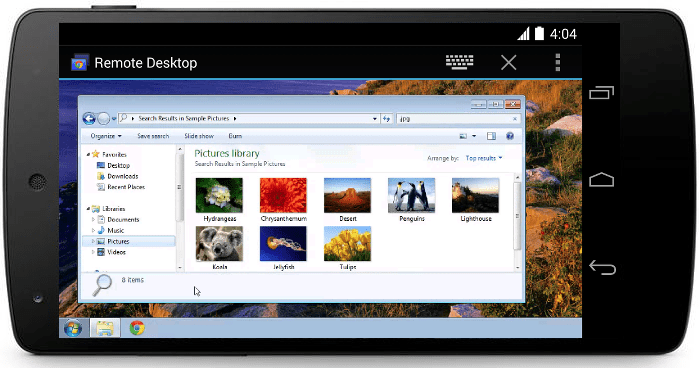
Google this morning launched a mobile client application called “Chrome Remote Desktop app for Android” (whew!) which allows for remote access to your Mac or PC from your Android device, whether smartphone or tablet. The new app is an extension of Google’s previously launched Chrome Remote Desktop screen-sharing service, which allows you to share your desktop’s screen with other Chrome browser or Chromebook users.
 
As with its big-screen counterpart, to use the Android application you first have to install a helper application on your desktop or laptop computer. That app is here in the Chrome Web Store and works on Windows (XP and above), Mac (OS X 10.6 and above) and Linux computers. The helper app installs as an extension to Google Chrome or the Chrome-based OS that powers Google’s Chromebooks.

Once installed, however, you’ll be able to open the app and connect to any of your computers with just a tap, manage them, and navigate through their files and folders from afar — like a modern version of GoToMyPC, for example.
We’ve known an Android client was in the works for some time, as there was even a functional version of the Android client available back in January, though it required that you compile the app from source in order to use it. An iOS version is also in the works, but its development is said to be further behind.

The move comes at a time when competitor Amazon is targeting enterprise users with its own version of remote access software, Amazon Workspaces. Officially launched to the public in March, this service similarly lets company employees access their work computers from any device, including Mac, PC, iPhone, iPad, Android or Kindle Fire HDX tablets. Of course, in Amazon’s case, the goal is to make its tablets appear more business-friendly.

Google’s Remote Desktop, on the other hand, has a more consumer-focused vibe, which even had the company once touting the service as a way to be the family hero by “adjusting printer settings on your mom’s computer to finding a lost file on your dad’s laptop,” for example.
The official Chrome Remote Desktop Android app is available here on Google Play.

Sunday, 20 April 2014

Remove Facebook adds

Nowadays Facebook Showing many Adds there is simple way to remove Facebook adds by using Facebook cleaner.

In the above photo you can see Circles on the Adds by using Facebook cleaner you can remove Facebook Adds.

Saturday, 12 April 2014

Samsung: 'Limited number of Galaxy S5 devices' have fatal camera flaw

Samsung started selling its new Galaxy S5 smartphone just two weeks ago, but it appears that at least some of the units that shipped have a major flaw in its camera hardware that cannot be fixed once it shows up.


The Verge reports that some owners of the Galaxy S5 have posted up word on Internet message boards that a "Warning: Camera Failure" message has popped up on their devices, for no apparent reason. When this message is seen, the camera hardware inside the phone stops working and cannot be fixed by normal consumer means, such as reinstalling the camera app, rebooting the phone or performing a full reset of the device.

In a statement, Samsung said, "We have learned that a limited number of Galaxy S5 devices may have an issue that causes 'Camera Failure' pop-up error message." Owners are covered by the company's warranty and can exchange their faulty phone by calling Samsung at 1-888-987-4357. People who bought the smartphone with a specific carrier can also get a new version at no cost. So far, Samsung has yet to say why this flaw is popping up and how many Galaxy S5 units might be affected.

Source: The Verge | Image via Samsung

Wednesday, 26 March 2014

Apple engineer says OS X and iOS will not merge


For quite some time now, there have been whispers and even some indications, like the increased integration between iOS and Mac OS X, that the two would merge into a single operating system at some point down the line. However, if you ask one Apple engineer, that event is simply not on Apple’s calender.

Who better to common on, and pour cold water all over, the notion of OS X and iOS being melded into a single piece of software than Craig Federighi, who is Cupertino’s lead on software engineering. Here’s what he had to say when he spoke with Macworld:
“The reason OS X has a different interface than iOS isn’t because one came after the other or because this one’s old and this one’s new.”


But what about the fact that there has been some integration between iOS and OS X? For instance, with OS X Mavericks, which was released this past October, if you search for directions on your Mac or MacBook, you can actually forward them directly to your iPad or iPhone from the OS X Maps app. Federighi acknowledged that integrating the two will continue, but only where appropriate.

“You don’t want to say the Mac became less good at being a Mac because someone tried to turn it into iOS,” Federighi said. “So you’ll see them be the same where that makes sense, and you’ll see them be different in those things that are critical to their essence.”

Volta Apple iPhone Sound Block


There’s really an endless number of options when it comes to sound amplifiers for your iPhone, but when you’re looking for a passive offering, few do it better than the Volta Sound Block. Amplifying your iPhone’s speaker without any chargers, electronics or Blue -Tooth, this sound block is a true work of art. 


The block itself is crafted from Oregon sourced Northwest Alder, and has been paired (through the use of super strong Neodymium Magnets)with a fully adjustable bison horn. To ensure that your Apple device never sees a scratch, the designers at Volta Sound have also outfitted the block with wool lining from Pendleton Woolen Mills, and the included travel bag lets you enjoy passive amplified sound on the road.

Thursday, 27 February 2014

Flappy Bird removed from Google Play Store, iOS App Store


The viral mobile game "Flappy Bird" has been removed from the Apple and Play Store after the developer, Dong Nguyen, claimed the game was "ruining his life."

"Flappy Bird" took the gaming community by surprise, reaching over 50 million downloads, and hitting the No. 1 spot on both the iOS App Store and Google Play Store. The actual game was programmed in "just a few nights" and used a graphical style similar to Nintendo's classic Mario games. It was released in May 2013, though it didn't find popularity until recently, when it became a smash hit.

Before going silent on Twitter, Nguyen said that the attention he's received for the game, such as the stress of earning approximately $50,000 a day, were why he removed it from the stores. Some have claimed he was afraid of legal action from Nintendo, however, which he denied. Nguyen said he is not accepting any offers to sell the game. 


Nguyen previously said he would bring the game to Windows Phone, though port almost certainly won't be released now.

Source: The Mirror | Flappy Bird and Twitter Feed via Amazon and Twitter

Wednesday, 19 February 2014

Facebook buys WhatsApp messaging service


WhatsApp, the popular cross platform messaging app, has been acquired by Facebook for an astonishing $16 billion, as the world's biggest social network continues to overhaul its mobile messaging experience.

The SEC filing reveals that the purchase will be split between cash and stock, at $4 billion and $12 billion respectively. This is equivalent to sixteen Instagrams, two Nokias or seven Motorolas.

The future of the 450 million user strong WhatsApp service hangs in some doubt as Facebook will likely tweak the app for their own liking, however in a press release, they assured that the WhatsApp brand will remain intact, with Facebook Messenger continuing to operate separately.

70% of WhatsApp's users are active every day, and the volume of users approaches that of global SMS, suggesting that this move may be highly profitable for the site, especially if they integrate their advertising network.

Facebook turned 10 years old earlier this month, and currently has over 1.2 billion users of their own, many of which use Facebook Messenger, a recently redesigned messaging app which has previously been seen as a direct competitor to WhatsApp. They also recently released Paper for iPhone in the US, a news reader based upon their website, and a possible future replacement for their existing mobile apps.